Cute Bear Cartoon Font
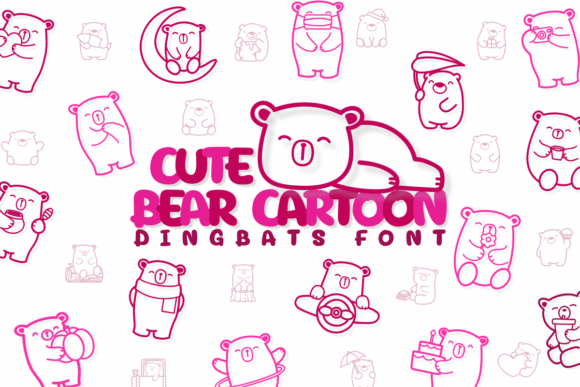
Working on a new branding project for a small, local café recently, I found myself scrolling through my font library looking for something that felt both playful and professional. The client wanted a visual identity that felt warm and approachable, but still had a sense of sophistication. That’s when I stumbled upon Cute Bear Cartoon, a dingbats font with a sketched theme that immediately caught my eye.
The first thing I noticed about Cute Bear Cartoon was its hand-drawn aesthetic. It wasn’t overly stylized or cartoonish in a way that felt cheap or unrefined. Instead, it had a gentle, whimsical charm that made me think of cozy coffee shops, handmade goods, and personal touches. The font’s characters were slightly irregular, with soft curves and subtle imperfections that gave it a friendly, almost artisanal feel.
I started by testing it on a logo draft. I paired it with a simple sans serif for the tagline, which helped balance the playfulness of the dingbats font without overwhelming the design. The result was clean, modern, and just the right amount of personality. It worked well as a headline font, adding a touch of warmth to the brand’s visual language.
As I moved into packaging design, I experimented with using Cute Bear Cartoon on product labels and cup sleeves. The font’s sketched theme made it perfect for a café that prides itself on handmade items and custom orders. It added a sense of individuality and care that aligned perfectly with the brand’s values.
One of the things I appreciate most about Cute Bear Cartoon is how it can be used in different contexts. On a shop sign, it brought a sense of friendliness and approachability. On a business card, it added a unique signature that stood out from more traditional fonts. Even on a social media graphic, it felt like a natural extension of the brand’s voice.
Readability wasn’t a concern, even though the font has a distinctive style. The characters were well-proportioned and easy to read, even at smaller sizes. This made it a great choice for short-form text, such as captions, headings, or accents in a larger design system.
I also considered how Cute Bear Cartoon might pair with other typefaces. A classic serif font, for example, could provide a nice contrast while maintaining a cohesive look. Similarly, pairing it with a clean sans serif offered a modern twist that still felt grounded and authentic.
When working with clients, I always recommend testing a font in multiple applications before committing to it. Cute Bear Cartoon proved to be versatile enough to work across different mediums—whether it was a website header, a flyer, or a printed menu. Its ability to adapt to various formats made it a reliable choice for a wide range of design needs.
Another aspect worth mentioning is the font’s file format and licensing. As a dingbats font, it likely includes a range of symbols and icons that can be used creatively in design projects. This makes it especially useful for DIY enthusiasts, crafters, and small businesses looking to add a unique touch to their branding materials.
For a branding project, consistency is key. Cute Bear Cartoon helped establish a visual rhythm that tied together different elements of the design. Whether it was a logo, a social media post, or a product label, the font maintained a cohesive identity that reinforced the brand’s message.
It’s also worth noting that Cute Bear Cartoon can be used in both digital and print formats. Its sketched theme adds a tactile quality that translates well to physical materials, making it ideal for packaging, signage, and promotional items.
Overall, Cute Bear Cartoon is a font that brings a sense of warmth and creativity to any project. It’s not the kind of font you’d use for long blocks of text, but as a display or accent font, it shines. Its personality makes it perfect for brands that want to stand out without sacrificing professionalism.
Whether you’re designing for a café, a boutique, or a creative studio, Cute Bear Cartoon offers a fresh and inviting alternative to more conventional typefaces. It’s a reminder that sometimes the best design choices come from a place of curiosity and experimentation.
As I wrapped up the project, I felt confident that the font had played a meaningful role in shaping the brand’s visual identity. It wasn’t just a font—it was a tool that helped bring the client’s vision to life in a way that felt authentic and intentional.
For designers looking for a font that balances playfulness with polish, Cute Bear Cartoon is definitely worth exploring. It’s a great example of how typography can influence everything from brand perception to audience engagement.
And if you ever find yourself in need of a little creative inspiration, give it a try. You might just discover a new favorite in your font collection.